“I Wish the Wind Could Speak” – Material Thinking, Creative Arts Learning and Collaborative Exchange (Korea and Australia), 2025.
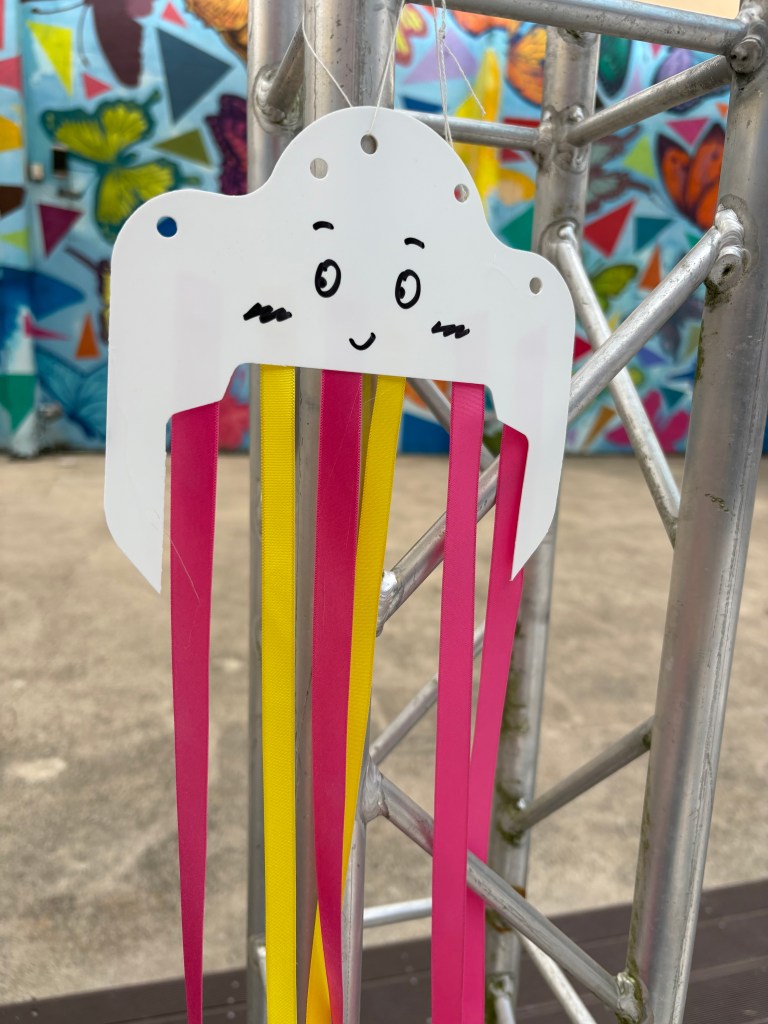
In a dynamic and joyful cross-cultural collaboration, Korean painter Kim Nuri and Australian artist Lynne Kent co-created a place-based arts education project – “Wind Friends” at Palbok Art Factory in Jeonju, Korea in 2025. As part of the Artplay Festival, Planet of Relationships: Infinite Intersections, children were invited to engage with recycled and discarded materials through imaginative, embodied play. Rooted in constructivist and sociocultural theories of learning, this initiative positions creative play as a vital mode of knowledge construction, social connection, and cultural exchange (Vygotsky, 1978; Dewey, 1938).
Kim Nuri, whose work is grounded in narrative painting, and Lynne Kent, known for interactive installations that reimagine industrial materials, together cultivated an aesthetic pedagogy where art becomes a language for interpreting the world (Eisner, 2002). Their collaboration reflects the power of cross-cultural partnerships in expanding children’s worldviews and fostering empathy and respect for difference. Supported by the Jeonju Cultural Foundation (Korea), ArtPlay, and the City of Melbourne (Australia), this project exemplifies how sustainable practices, creative play, and intercultural exchange can converge in transformative arts learning experiences.
Guided by the pedagogical principles of learning through doing (Dewey, 1938) and the Zone of Proximal Development (Vygotsky, 1978), Kim and Kent foster an environment where children are co-creators, not passive recipients. Through the transformation of waste into Wind Friends—playful sculptural figures animated by storytelling and the natural power of wind energy, children engage in processes of exploration, risk-taking, and meaning-making. These practices align with contemporary arts education models that emphasize process over product and value art-making as a form of inquiry and identity formation (Wright, 2012; Eisner, 2002).
At the heart of the project is a focus on materiality, described as the tactile, aesthetic, and symbolic qualities of materials as a key driver of learning. Discarded objects such as fabric scraps, wire, plastic container lids, and unused Christmas tinsel are reimagined through touch, play, and experimentation. This hands-on engagement invited children to enter into a dialogue with materials, where meaning emerges through the act of making (Ingold, 2013; Vecchi, 2010). The transformation of ‘waste’ into Wind Friends not only challenges conventional ideas of value and beauty but also encourages a sustainable mindset, aligning with eco-pedagogical and posthumanist frameworks that view matter as active and relational (Bennett, 2010; Taylor, 2017). In this way, material exploration becomes a sensory-rich process that fosters agency, empathy, and imaginative problem-solving, hallmarks of progressive arts education practice (Gandini, 2012).
Wind Friends come to life through puppetry, movement, and the performance of materials, engaging children in embodied storytelling and kinetic play. Inspired by the inherent animacy of flexible materials (Nicholson, 1971), children are encouraged to play with the wind to manipulate their creations. A cassette tape curtain hung in the exhibition area and allowed space for children to bring their creation to life by making it fly, dance, whisper, or play in the wind. This performative element draws on principles of drama pedagogy and puppet theatre, where objects are activated through gesture, rhythm, and narrative voice (Boal, 2002; Forman & Fyfe, 2012). Through this integration of movement and improvisation, children explore the natural power of wind and the interplay between materiality and performance. In this context, play becomes not only an artistic process but also a method for developing communication, empathy, and embodied cognition (Wright, 2012; Guss, 2005).
A central feature of the project is the thoughtful use of recycled materials sourced from both Korea and Australia, including cassette tapes recovered from the Palbok Art Factory in Jeonju Korea, which was a former cassette tape production site and clean industrial offcuts from an Australian waste recycling centre. These materials carry with them traces of the past: sounds once recorded, stories once told, and functions now obsolete. Their transformation into Wind Friends serves as a poetic act of reanimation, connecting children not only across cultures but across time. The intertwining of remnants from the natural and constructed worlds invites reflection on the interdependence of ecological and human histories (Morton, 2013), while encouraging children to consider their own role in shaping future environments. This dialogue between past and present and between nature and industry, is embedded in the making process itself. Turning everyday waste into meaningful, cross-cultural artworks celebrates renewal, storytelling, and shared creative futures.
Selfie– Arts Centre Melbourne and Virtual Creative Professionals in Schools with artist Lynne Kent
The SELFIE – Exploring my identity project was a collaboration between Arts Centre Melbourne, artist Lynne Kent, and Broadford Primary School. The project asked Gr. 4 students crucial questions about their identity and culminated in a multimodal performance response. Do I have one or many identities? How are they related? How do I live, work and play in the digital and real worlds? How am I seen vs how do I see myself? How do I imagine myself in my mind, online and on the screen? From Creative Victoria’s 2017 Virtual Creative Professionals in Schools funding, the collaboration allowed students, teachers, the artist and the organisation to take a journey of exploration, interrogating the differences and similarities between the live and digital self, and playing with those ideas through performance.
Shadowland
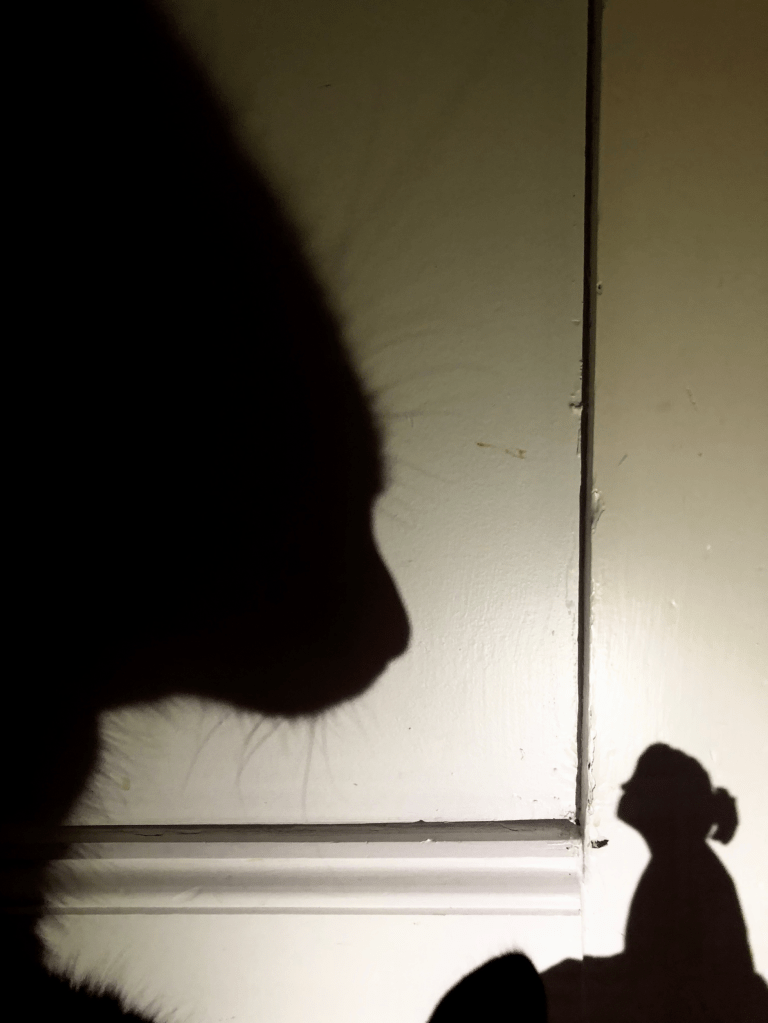
In this workshop children will design, construct and play with their shadow creature in the different worlds of ShadowLand.
Each domed tent has a unique shadow set and torch waiting for a shadow creature to come and play.
Signal and The City of Melbourne, 2025
ROOM
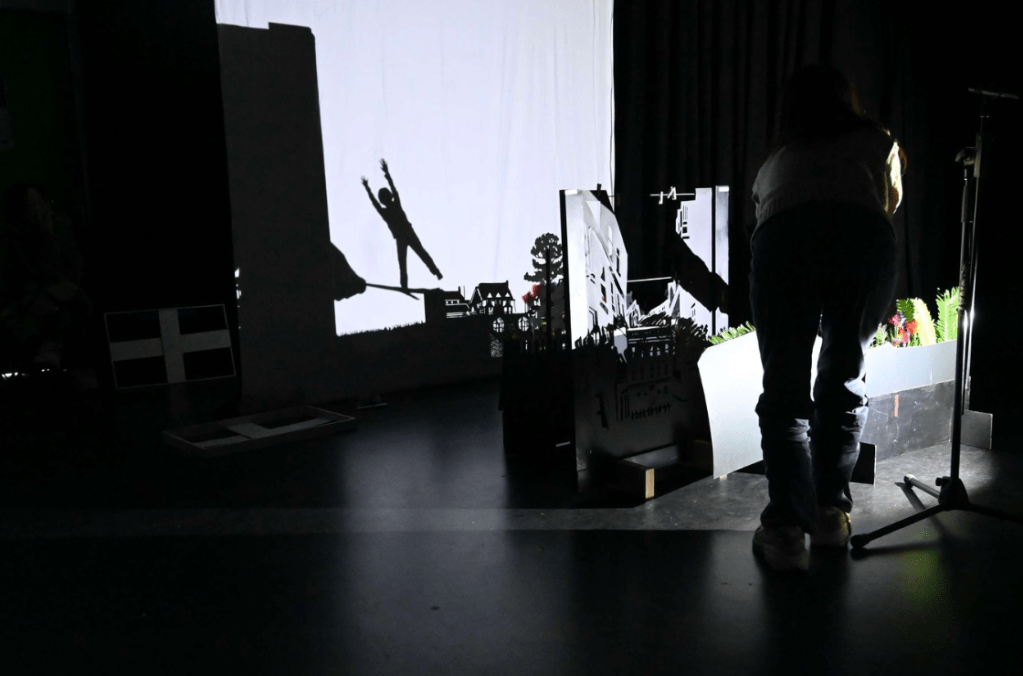
There is a space at the edge of light where shadows fall, and stories begin. This creative 2-day workshop invites you to explore what’s seen, what’s hidden, and what it means to truly take up space in a room. Using light, movement, and storytelling, you’ll experiment with shadows to uncover characters, and scenes that emerge from silence, stillness, and imagination. ROOM is a playful and powerful experience for participants ready to explore performance in new. unexpected ways. For young people aged between 14 years and 25 years old.
 Lynne Kent